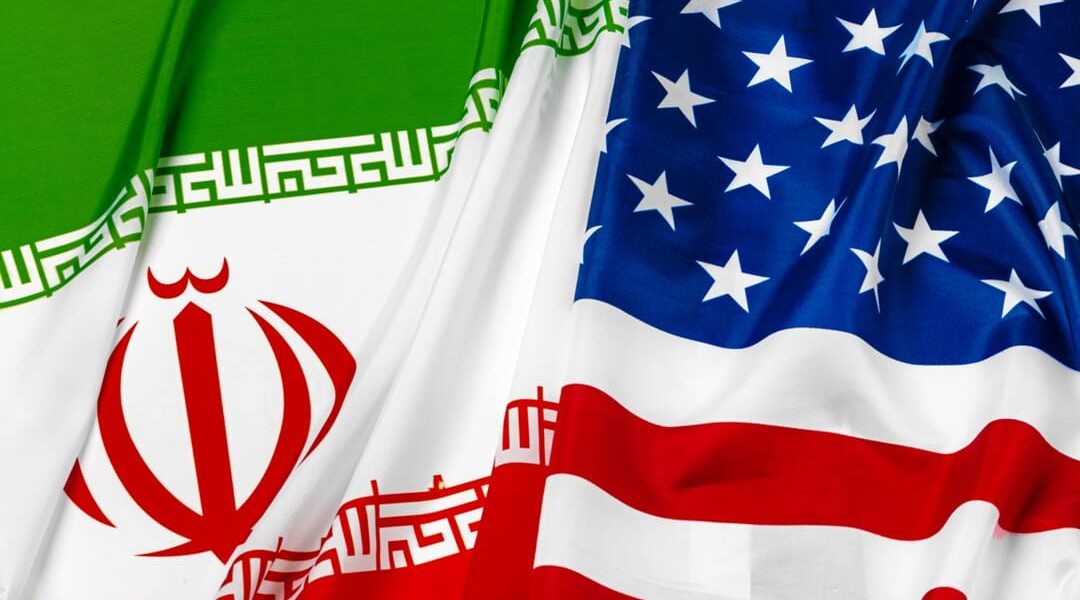

Tensions between the United States and Iran are once again at a critical point, as indirect nuclear negotiations continue in Geneva amid a significant American military buildup in West Asia.
After more than four hours of closed-door discussions — including a short break — the world is still waiting for a clear signal: is this headed toward diplomacy or confrontation?
Indirect Talks Through Oman
American and Iranian officials are holding their third round of indirect negotiations, with Oman serving as the mediator. The two sides are not speaking directly to each other but are instead communicating through Omani representatives.
The US delegation is led by former President Donald Trump’s special envoy Steve Witkoff and his son-in-law Jared Kushner. Representing Iran is Foreign Minister Abbas Araghchi.
The first round of talks took place in Muscat, Oman. The second was also held in Geneva. This third round lasted approximately three hours before pausing for consultations and brief public remarks.
Iran described the talks as “very serious,” while Oman characterized the atmosphere as “positive.” Still, no breakthrough has been announced.
The Core Dispute: Iran’s Nuclear Program
At the heart of the negotiations is Iran’s nuclear program.
The United States accuses Iran of pursuing nuclear weapons capability. Iran strongly denies this, insisting its program is strictly for peaceful civilian energy purposes.
Washington remains unconvinced. US officials demand that Iran completely halt uranium enrichment and significantly scale back its missile program and regional influence through proxy groups.
Iran, on the other hand, insists it has a sovereign right to develop nuclear energy for peaceful use. It is also demanding the lifting of economic sanctions that have severely impacted its economy.
Foreign Minister Araghchi reiterated that the negotiations are focused on two central issues: sanctions relief and recognition of Iran’s nuclear rights.
Military Pressure Mounts
While diplomats talk in Geneva, military assets are positioning across the region.
The United States Navy has deployed two carrier strike groups near Iran. The USS Abraham Lincoln is already stationed in the Arabian Sea. It is being joined by the USS Gerald R. Ford — the world’s largest aircraft carrier — which has left the Mediterranean and is expected to reach Israel shortly.
In addition, thousands of American troops, fighter jets, and refueling aircraft have been deployed across West Asia.
This marks the largest American military buildup in the region since the 2003 Iraq War — a clear signal that Washington is preparing for multiple scenarios.
The US has also sent advanced fighter jets to Israel in what officials describe as a historic deployment ahead of a potential wartime contingency.
Mixed Signals from Washington
US President Donald Trump has said he prefers diplomacy but has also openly threatened military action if negotiations fail.
Secretary of State Marco Rubio has warned that Iran’s ballistic missile arsenal poses a serious threat to American interests in the region. He noted that Iran possesses thousands of short-range missiles capable of targeting US bases in Saudi Arabia, Qatar, Bahrain, and the United Arab Emirates.
The strategy appears to be dual-track: negotiations paired with maximum pressure.
Iran’s Warning
Iran has responded with its own warning. Officials say that any US strike would not remain confined to Iranian territory. Tehran has threatened to target American military assets across the region if conflict erupts, potentially dragging neighboring countries into a broader war.
Iran has made it clear that in such a scenario, there would be no winners.
Is Peace Still Possible?
Despite the rising tension, diplomacy is not dead.
Analysts suggest a possible compromise could involve Iran freezing uranium enrichment at current levels while the US gradually lifts sanctions in phases. Continued negotiations could stabilize the situation, at least temporarily.
But the margin for error is thin.
If either side escalates too far — diplomatically or militarily — the consequences could be immediate and unpredictable.
A Region on Edge
The question remains the same each day: will the US attack Iran?
So far, no strike has occurred. But with warships in position, rhetoric intensifying, and no final agreement in sight, the danger has not passed.
For now, Geneva serves as a pressure valve. If diplomacy holds, the region may see an uneasy calm. If it fails, West Asia could change overnight — and the impact would be felt far beyond the region.